
What Can a Full-Body MRI Detect Before Symptoms Appear? The Silent Diseases Most People Miss – RiverOaks MRI & Diagnostic
Introduction
Preventive healthcare is changing fast. People no longer wait for symptoms. Instead, they search for answers earlier. They want clarity before disease appears.
That shift explains the growing demand for a full body MRI scan.
A wellness MRI scan allows doctors to see detailed images of organs, tissues, and body systems. Unlike many other imaging tests, an MRI scan uses no ionizing radiation. As a result, it provides a safer way to evaluate the body during preventive health screening.
Today, more individuals choose preventive MRI screening to detect silent diseases early. Executives, athletes, and health-conscious adults especially want a deeper understanding of their health.
In Sugar Land, RiverOaks MRI & Diagnostic leads this preventive health movement. The clinic offers advanced full body MRI scans in Texas and comprehensive health screening programs.
But an important question remains.
What can a full-body MRI detect before symptoms appear?
Let’s explore.
Why Preventive Health Screening Matters More Than Ever
Modern medicine treats illness well. However, prevention works even better.
Many diseases develop quietly. Patients often feel healthy for years before symptoms appear.
For example:
- Early tumors often grow silently
- Spinal degeneration develops gradually
- Organ abnormalities progress slowly
- Vascular issues evolve without pain
Therefore, early detection health screening becomes essential.
A full body health scan MRI allows physicians to identify structural changes inside the body. Doctors then evaluate those findings and recommend follow-up care if needed.
Preventive imaging does not replace regular medical care. Instead, it adds deeper insight.
That insight helps patients make better health decisions.
What Is a Full Body MRI Scan?
A full body MRI scan is an advanced imaging test. It captures high-resolution images of multiple organs and systems in one session.
Unlike targeted MRI scans, a whole body MRI scan evaluates many areas at once.
These typically include:
- Brain
- Spine
- Liver
- Kidneys
- Pancreas
- Pelvis
- Musculoskeletal system
As a result, physicians gain a broad view of the body.
Because MRI technology uses magnetic fields and radio waves, it avoids radiation exposure. Therefore, many people prefer it over CT scans for preventive health imaging.
Silent Diseases a Full-Body MRI Can Detect Early
Many serious conditions remain silent during early stages.
However, early disease detection imaging can reveal structural changes.
Below are some of the most important conditions detected during preventive MRI programs.
Brain Abnormalities and Neurological Changes
An MRI scan provides detailed images of the brain.
Physicians may detect:
- Brain tumors
- Vascular abnormalities
- Cysts or benign growths
- Structural irregularities
These findings may require further evaluation. Early identification allows specialists to intervene sooner.
Many patients choose MRI scan for brain health screening for this reason.
Spinal Degeneration and Disc Issues
Spinal problems often develop slowly.
Common findings during MRI scan for spinal issues include:
- Disc degeneration
- Herniated discs
- Spinal narrowing
- Vertebral abnormalities
These issues often appear long before severe pain begins.
Therefore, MRI scan for early spinal issues can help patients address problems earlier.
Organ Abnormalities
A full body MRI scan also evaluates internal organs.
Physicians may identify:
- Liver abnormalities
- Kidney irregularities
- Pancreatic changes
- Pelvic structural variations
Patients often request MRI scan for liver problems or MRI scan for kidney abnormalities during comprehensive health screening MRI programs.
Lung and Chest Findings
Although CT scans remain common for lung evaluation, specialized MRI techniques may identify structural changes.
Some preventive screening programs evaluate for:
- Lung nodules
- Chest abnormalities
- Structural irregularities
Early evaluation may prompt additional imaging if necessary.
Musculoskeletal Conditions
MRI imaging provides excellent soft-tissue detail.
Doctors may identify:
- Tendon injuries
- Joint inflammation
- Musculoskeletal abnormalities
Athletes frequently request MRI scan for athletes health screening to monitor physical performance and injury risk.
Can a Full-Body MRI Detect Cancer Early?
Many patients ask this question.
Can a full body MRI detect cancer early?
The answer requires nuance.
MRI scans may detect abnormal masses or structural changes. Physicians then investigate further.
For example, MRI may reveal:
- Tumors
- Suspicious lesions
- Unusual tissue growth
Doctors may then order additional tests. Those tests confirm or rule out cancer.
Therefore, MRI scans support MRI screening for cancer as part of broader preventive health strategies.
Who Should Consider a Full-Body MRI Scan?
Preventive health screening is not only for people with symptoms. In fact, many individuals choose full body MRI scans specifically because they feel healthy and want to maintain that health.
Several groups may particularly benefit from preventive imaging.
Health-Conscious Individuals
Many people today prioritize proactive healthcare. They focus on nutrition, exercise, and regular medical checkups.
For these individuals, a wellness MRI scan provides additional insight into internal health. It allows them to confirm that their lifestyle choices support overall wellness.
Individuals With a Family History of Disease
Family history often plays a role in long-term health risks. Conditions such as certain cancers, neurological disorders, and organ diseases sometimes appear across generations.
People with a family history of health concerns often seek preventive MRI screening to gain deeper insight into their own health status.
Executives and Professionals
Busy professionals frequently struggle to schedule multiple medical appointments. A comprehensive MRI health checkup allows them to evaluate several body systems during one visit.
Because of this convenience, many executives choose preventive health programs that include advanced imaging and physician consultation.
Athletes and Active Individuals
Athletes rely on their bodies for performance. They often seek advanced diagnostics to monitor physical health and prevent injuries.
MRI imaging provides detailed insight into joints, muscles, and connective tissues. This information helps athletes identify issues early and maintain peak performance.
Benefits of a Full Body MRI Scan
Preventive imaging offers several important advantages. A full body MRI scan provides a deeper understanding of the body before symptoms appear. Instead of focusing on only one organ or area, this advanced imaging technology evaluates multiple systems during a single session. As a result, individuals gain broader insight into their overall health and potential risks.
Comprehensive Health Insight
A whole body health assessment MRI allows physicians to evaluate several major body systems at once. The scan can review areas such as the brain, spine, abdomen, pelvis, and musculoskeletal structures. This wide view helps doctors identify structural changes that may otherwise remain unnoticed.
For example, a wellness MRI scan may reveal early disc degeneration in the spine, subtle organ irregularities, or soft-tissue abnormalities. When doctors review these images carefully, they can identify patterns that may require monitoring or further evaluation. Because the scan captures detailed images of multiple regions, it supports a more complete picture of a patient’s internal health.
This comprehensive insight is one reason why many health-conscious individuals now choose preventive MRI screening as part of their long-term wellness strategy.
Early Risk Awareness
Another important benefit of a full body MRI scan is early awareness. Many diseases develop slowly and do not cause noticeable symptoms during the early stages. However, structural changes may still occur within organs or tissues.
Preventive imaging helps physicians detect these subtle changes sooner. Once doctors identify a potential concern, they can recommend additional testing, monitoring, or lifestyle adjustments. Early awareness often allows patients to take proactive steps rather than waiting for symptoms to develop.
For many people, this proactive approach creates peace of mind. It also supports informed conversations between patients and their healthcare providers about long-term health planning.
Non-Radiation Imaging
One major advantage of MRI technology is that it does not use ionizing radiation. Instead, MRI scanners use strong magnetic fields and radio waves to create detailed images of the body’s internal structures.
Because of this, many individuals prefer an MRI scan without radiation exposure compared to imaging methods such as CT scans or X-rays. This feature makes MRI particularly appealing for preventive health screening programs that focus on evaluating the body safely.
Patients who want deeper insight into their health often appreciate that MRI technology can provide detailed information while avoiding radiation.
Personalized Health Planning
A full body MRI scan does more than simply produce images. The results help physicians guide personalized health decisions.
After reviewing the scan, healthcare providers can discuss findings with patients and explain what the images mean. If the scan identifies areas that require monitoring, doctors may recommend follow-up imaging, additional tests, or lifestyle adjustments. In many cases, the scan confirms that the body appears healthy, which can provide reassurance.
Either way, the information supports more informed health decisions. When combined with physician consultation, bloodwork, and other diagnostic tools, MRI results help create a personalized preventive health plan tailored to each individual.
Supporting Proactive Healthcare
Ultimately, the goal of preventive imaging is awareness. A full body MRI scan helps individuals understand what may be happening inside their bodies before problems become noticeable. This proactive approach encourages people to take ownership of their health and work closely with their healthcare providers to maintain long-term wellness.
Why RiverOaks MRI & Diagnostic Stands Out for Preventive MRI Screening
When individuals search for a full body MRI scan near me, they want more than just imaging technology. They want accuracy, expertise, and a healthcare team that understands preventive medicine.
In Sugar Land, RiverOaks MRI & Diagnostic has built a strong reputation for advanced preventive health screening.
The clinic focuses on proactive care. Instead of offering standalone imaging services, the team provides an integrated approach to health evaluation.
Comprehensive Preventive Programs
RiverOaks MRI & Diagnostic combines several services to create a complete health assessment. These services often include:
- Full body MRI scans
- Physician consultations
- Advanced bloodwork
- Genetic testing
- Personalized health planning
This integrated model allows patients to understand their health from multiple perspectives.
Advanced Imaging Technology
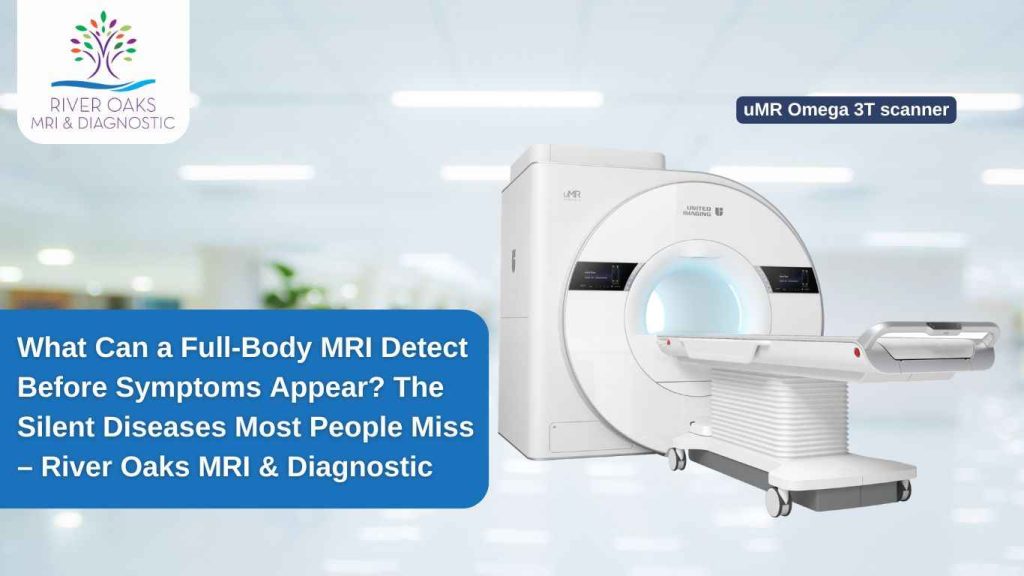
High-quality imaging plays a critical role in preventive screening. RiverOaks MRI & Diagnostic uses advanced MRI technology to capture detailed images of organs, tissues, and body systems.
These high-resolution images help physicians evaluate potential concerns and guide further medical decisions.
Personalized Patient Care
Preventive healthcare works best when it focuses on the individual. At RiverOaks MRI & Diagnostic, physicians review imaging results with each patient and discuss the findings in detail.
This personalized approach helps patients understand their health clearly and plan their next steps with confidence.
A Leading Preventive Health Clinic in Texas
Patients across Texas and the Greater Houston area seek advanced preventive screening programs. Many individuals travel to Sugar Land to access comprehensive MRI health assessments and physician-guided care.
For those looking for advanced preventive health screening, RiverOaks MRI & Diagnostic offers one of the most structured and patient-focused programs available today.
Frequently Asked Questions
- What can a full-body MRI detect before symptoms appear?
A full-body MRI scan can detect structural abnormalities in organs and tissues before symptoms develop. Doctors may identify tumors, spinal degeneration, organ irregularities, cysts, vascular abnormalities, and soft-tissue problems. Because MRI imaging provides detailed internal views, it helps support early disease detection and preventive health screening.
- Can a full-body MRI detect cancer early?
A full-body MRI can identify suspicious masses or abnormal tissue changes that may indicate early cancer. Physicians then evaluate those findings and may recommend additional tests for confirmation. Many people choose preventive MRI screening because it helps detect potential tumors earlier than symptom-based diagnosis.
- What diseases can a full-body MRI scan identify?
A full body MRI scan may reveal conditions such as brain tumors, spinal disc degeneration, liver abnormalities, kidney cysts, vascular irregularities, musculoskeletal injuries, and soft-tissue tumors. Preventive imaging helps doctors monitor these conditions before symptoms appear.
- Is a full-body MRI good for preventive health screening?
Yes. A full-body MRI scan is widely used for preventive health screening because it evaluates multiple organs and body systems during one imaging session. It helps identify hidden health risks early and supports proactive healthcare planning.
- How accurate is a full-body MRI for early disease detection?
MRI technology produces highly detailed images of soft tissues, organs, and structures inside the body. When experienced radiologists review these images, they can identify abnormalities that may indicate early disease. This accuracy makes MRI valuable for preventive diagnostic imaging.
- Can a full-body MRI detect tumors or abnormal growths?
Yes. MRI imaging can reveal abnormal tissue growths, cysts, and tumors in many areas of the body. Doctors then review the findings and determine whether additional imaging or tests are necessary.
- What organs are checked during a full-body MRI scan?
A whole-body MRI scan typically evaluates the brain, spine, liver, kidneys, pancreas, pelvis, and musculoskeletal system. Some advanced programs also review vascular structures and other internal organs for abnormalities.
- Can a full-body MRI detect brain abnormalities?
Yes. MRI scans provide detailed images of brain structures. Doctors may detect tumors, cysts, vascular abnormalities, or structural irregularities. Early detection helps guide further neurological evaluation if necessary.
- Does a full-body MRI check the spine and joints?
A full-body MRI scan usually includes the spine and musculoskeletal structures. The scan may reveal disc degeneration, herniated discs, joint inflammation, or other structural issues affecting movement and posture.
- Can a wellness MRI scan detect hidden health problems?
Yes. A wellness MRI scan helps detect silent diseases that may not produce symptoms during early stages. These may include tumors, organ abnormalities, spinal issues, and soft-tissue conditions.
- Is a full-body MRI safe compared to CT scans or X-rays?
MRI technology does not use ionizing radiation. Instead, it uses magnetic fields and radio waves to create images. Because of this, many people prefer MRI scans for preventive health screening.
- Who should consider getting a preventive full-body MRI scan?
Health-conscious individuals, executives, athletes, and people with a family history of disease often consider preventive MRI screening. The scan helps them monitor internal health and detect potential risks early.
- How long does a full-body MRI scan take?
Most full-body MRI scans take about 45 to 60 minutes depending on the imaging protocol. Patients lie comfortably in the scanner while the system captures detailed images of the body.
- What is the difference between a full-body MRI and a regular MRI?
A regular MRI focuses on a single body area, such as the knee or brain. A full-body MRI scan evaluates multiple organs and systems during one session, providing a broader assessment of overall health.
- Can a full-body MRI detect heart or vascular problems?
MRI scans can identify certain vascular abnormalities and structural changes in blood vessels. If doctors detect concerns, they may recommend additional cardiovascular testing for further evaluation.
- Does a full-body MRI detect liver or kidney disease?
Yes. MRI imaging can reveal cysts, lesions, structural abnormalities, and other changes in the liver and kidneys. Early detection helps physicians monitor organ health and recommend further evaluation when needed.
- What are the benefits of a full-body MRI for early detection?
A full-body MRI scan offers several benefits including early disease detection, comprehensive organ evaluation, non-radiation imaging, and personalized health insights. These advantages support proactive health monitoring.
- Is a full-body MRI worth it for proactive health monitoring?
Many individuals consider it valuable because it provides detailed information about internal health. Early detection of abnormalities allows patients to make informed healthcare decisions and monitor potential risks.
- Where can I get a full-body MRI scan in Sugar Land, Texas?
People searching for a full-body MRI scan in Sugar Land often choose RiverOaks MRI & Diagnostic, which offers advanced preventive MRI screening and comprehensive health evaluations.
- How does a full-body MRI help with preventive healthcare planning?
A full-body MRI scan provides detailed insight into internal organs and body systems. Physicians review the images and help patients develop personalized health plans that support long-term wellness and early disease prevention.
The Future of Preventive Health
Healthcare is evolving rapidly.
People now focus on proactive health screening instead of waiting for symptoms.
Advanced imaging, genetic insights, and physician guidance allow patients to take control of their health.
A full body MRI scan plays a key role in that transformation.
By detecting silent conditions earlier, preventive screening empowers individuals to make informed decisions about their long-term well-being.
For many people seeking clarity about their health, RiverOaks MRI & Diagnostic in Sugar Land, Texas provides one of the most comprehensive preventive health programs available today.